
7 Golden Rules of Pinball Design Every Manufacturer Should Follow
We are extremely blessed to be at a point where we have a number of pinball manufacturers making spectacular games for us to play. I have endless respect and gratitude for all of them, but there are a few notes I wish they would all take to heart.
Designing, creating, and building a pinball machine is an outrageously complicated and laborious process. It’s unreasonable to expect every game to be perfect, or even great. The fact that most games coming out over the last while are somewhere between good to great really is a testament to the dedication and skill of everyone involved. That said, I have a few “golden rules” I wish every manufacturer would print in large letters across their office space.
Rule 1: Is it fun?
Nothing is more important than this. The idea could be clever, complex, or even revolutionary; but if it’s not fun then it’s a complete waste of everyone’s time. While being the most important of all the rules, this one is also obviously the most difficult. I don’t expect you to always get it right, but it should be the question you ask for every feature you plan to build.
Rule 2: Never punish the player for making a shot
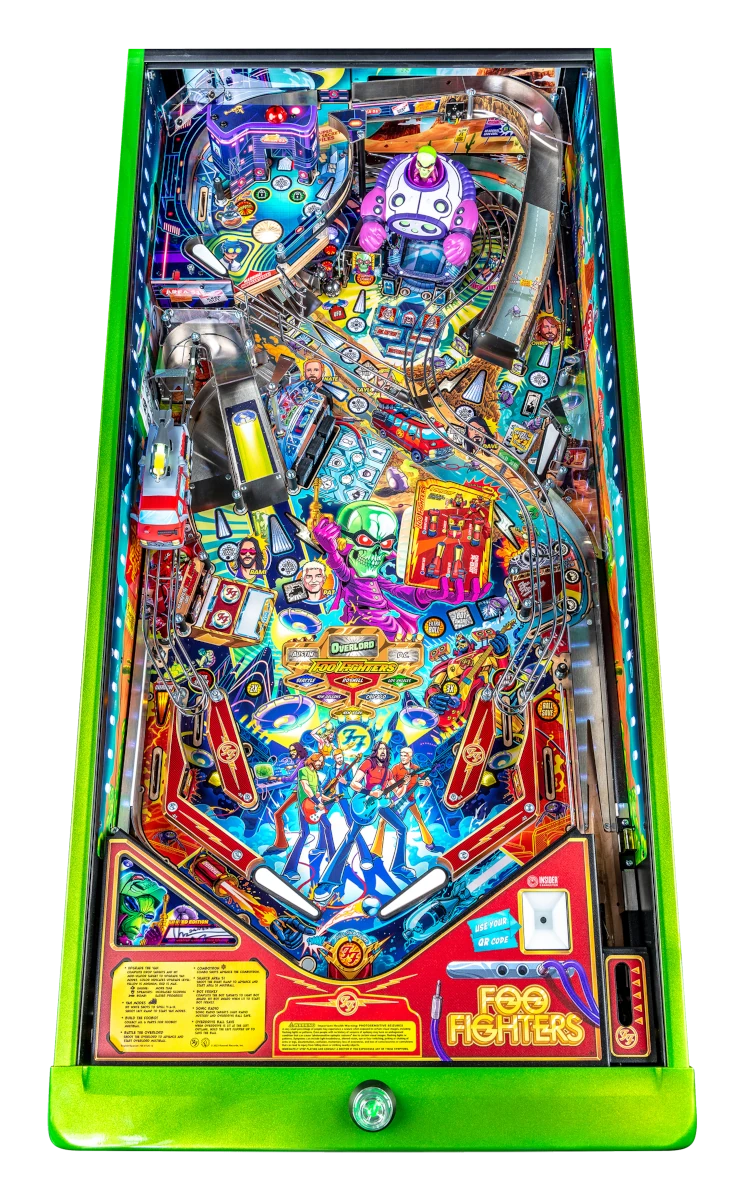
In this context a “shot” is one of the main shots of the game, like ramps or orbits. We’re not talking about targets, bash toys, or shots that are supposed to be dangerous. For a main shot, required to be hit for modes and other features, hitting it cleanly should never make you lose your ball out of poor design. A great example of this is the right orbit on Foo Fighters. If the machine isn’t set up just perfectly, hitting this shot cleanly (that’s what the player is supposed to do) drains you down the center. You should never say “hit this shot” then have them lose their ball for doing so. If you end up with a flawed design that does this then you have to add a ball save.
To the designers who argue “well just set up the game properly”: the majority of us play in bars, on location. We don’t get the luxury of setting up, or altering the setup, of games. Not everyone gets to have their own home collection.
Another feature that fits into this category are scoop ejects. If the scoop ejects straight down the middle you need to give the player their ball back.
Rule 3: Less is more
This is a universal principle for all art and design. If there are too many shots, all flashing too many colors, with too many things happening, no one without 100 hours on the machine has any idea what is happening or what they’re supposed to do. I’m looking at you JJP. You’ve made some truly spectacular games, but in other cases no one I know who doesn’t own one has any idea what’s happening at any point. Sure what you make might be pretty (really pretty)… but if it’s impossible to understand what’s happening you’re breaking the first rule.
Rule 4: Progression is the drug

The main thing that keeps a player coming back for “one more game” on a machine is the feeling of progression. Working towards accomplishments, progressing along the storyline, and getting just a little bit farther along the path to wizard mode. If you think of all of the most popular games over the last 20 years this is the biggest factor in the games that have risen to the top. Mini wizard modes along the path to the end goal. This is a concept no one seems to understand better than Keith Elwin, and I believe is one of the big reasons his games have been so popular and successful. Everyone, no matter beginner or world’s #1 has something to aim for.
Rule 5: Multiply with caution
Playfield and shot multipliers are some of the best and most interesting parts of many games. But going overboard with them completely breaks the game. Once you start creating large, and especially multiple large stacking multipliers, then playing the game without multipliers as the sole focus, playing it as it was designed (modes, multiballs, progress) all takes a back seat to the multiplier stack. Even when it’s hard to do it’s still not acceptable. An example: I can have the best game of my life playing Guardians of the Galaxy “normally”. Going through modes, crushing multiballs, blowing up cherry bomb. And I’ll still end up with half the points of Robert Gagno’s first ball with his 250x multiplied single shot on Sibling Rivalry. Sure, that stack is hard to do, but the fact it’s possible at all is the problem. Even he will tell you (at great length) about how this, in his opinion, breaks the game.
Rule 6: Make the modes worth playing
Modes are your main vehicle driving progression (Rule 4). If your point balance is off where the modes aren’t worth enough to be worth playing, then players will ignore them, or worse: time them out. I dread getting GOG as a tournament machine having to watch everyone spend minutes at a time timing out modes while we all wait to play.
Not allowing timing out by pausing timers isn’t a 100% solution, but that is at least better than nothing. If you’re “unable” to do that because of a licensing agreement then you made a mistake: you should never make an agreement that will force you to make a sub-par game. There’s always another theme option.
Rule 7: The plunge shouldn’t put you into danger
If the plunge is up top, sometimes it comes down as a house ball. That’s pinball, that’s not what I’m talking about. The best example of what I’m talking about is Stern Star Wars (2017). The plunge puts the ball immediately into extreme danger. 90% of all auto plunges go to the left outlane. This is unacceptable and universally the biggest complaint of the machine.
There you have it, my 7 Golden Rules of Pinball Design. I truly believe every game designed can take these to heart without limiting or restricting your creativity. Just seven simple rules to keep any machine from being that dud everyone dreads at an event.
Image credit: https://unsplash.com/@patv83
Comments
Log in to leave a comment.
