

Pinball Tournament Qualifying: A Beginner's Guide to Making the Finals
Doing well in a big pinball tournament takes more than knowing how to play the machines. It takes an understanding of strategy outside the games themselves, and more importantly understanding yourself as a player.
Succeeding in a big tournament starts long before you ever get to the venue, if you really want to succeed you have to come prepared.
Preparing for the Event: Game Research
Long before the event starts the list of games you’ll be playing will be made available. This is when your tournament truly starts. You’re going to want to grab the list of machines and save them somewhere convenient. This is the first step for every tournament you go to. This is also why I created the Tournament Notes section on this site. It’s a convenient place to save them and share them with your friends.
Each game in the event you need to look up. Start with images and take a good look at the playfield. With that image on your screen (or in your mind) head to PinTips or for classics Bob’s Guide (written by the GREAT Bob Matthews. If the event is big enough he will be there. He’s amazing, thank him for all his work, and spend time chatting with him if you have the chance!).
You want to come up with a simple few line set of instructions for yourself for how you plan to approach the game. The plan should be based on what you’re comfortable with and can execute. If you can’t make 10 Shadow loops then your plan can’t be Shadow loops even if that’s what other people are doing. Classics are typically short UTAD (Up Top All Day), moderns need a bit more. Some examples:

Supersonic - SS - Bally - 1979
Top middle lane lights spinner. Spinner all day. Tap pass right to left.
Sinbad - SS - Gottlieb - 1978
Each Drop bank increases bonus X (only awarded in order). Beware the scissor!
Batman 66 - DMD - Stern - 2016
Start Joker Or Catwoman mode, phone edge standups to light locks. TV targets light TV modes, Shame are multiballs. Go multiball all day.
Attack From Mars - DMD - Bally - 1995
Hold left flipper on plunge, hit the saucer standups to immediately open them. Left flipper shoot saucer, right flipper shoot locks. Can backhand lock when lit.
These plans are for qualifying primarily. Simple, quick, and gives you an easy plan on what to do. Your plan won’t always be the “best” or what the top players are doing, it’s what you can execute and will yield enough points to get you through qualifying.
Once you have this worked out you ideally want to find video of the games being played. But you really only want to find tournament footage. Watching Raymond Davidson streaming a 14 Billion point Rush Game is fun, but it’s not exactly what you need to prepare for a tournament. Watching groups on Rush in INDISC finals will give you far greater knowledge for tournament play.
Check for rule changes!
Every tournament has games set up differently than you would find them out in the wild. Rules will be set, EB’s turned off, and often there will be custom ROMs completely changing some ways the games play. This is critical information. For example if Sinbad is set to EB’s on, then getting your purple drops to light the EB becomes way more important than if it’s off. 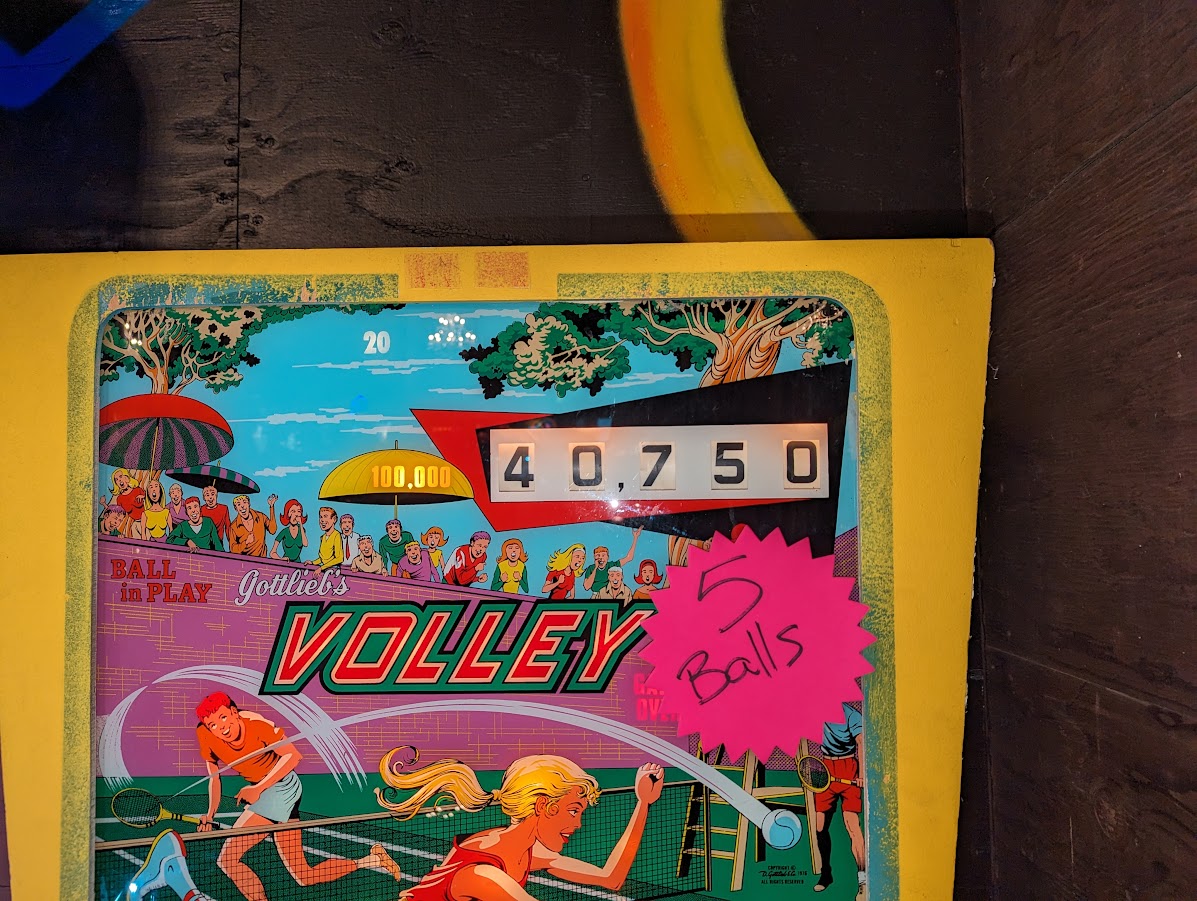
Games with custom ROMs can completely change how you play. Cheetah is typically played for light collect bonus, then shoot collect bonus as many times as you can. But new better ROMs make it so you can only collect bonus once per ball, so now building bonus before collecting is crucial. While rules and ROMs are often posted with the games list, things change and that’s not always the case. Read the posted papers on the backglass when you get to the event, find out how it’s set or changed, then edit your plan accordingly.
Types of Qualifying
While there are technically a lot of different qualification formats we’re only going to focus on two: cards and pump & dump. Matchplay and other formats typically don’t require much strategising other than beating your opponents one game at a time.
Pump & Dump
There are two types of P&D, unlimited entries and limited entries. Your strategy is the same but with limited you just really need to be aware of your remaining entries and never wasting any.
How it works
A pump and dump typically works the same way (the numbers will change but the theory is the same, just be sure to understand the rules before you start): there will be a number of machines (let’s say 15) and your best scores from 10 of them make up your total qualifying score.
The best game on a machine gets a set number of points. Each game after that gets fewer points. Important to note is the point scale is typically:
200 points
195 points
190 points
189 points
188 points
And every game continues on worth 1 fewer points until we reach 0.
How to approach it
The typical strategy for this is usually pretty simple. Start by playing every game in the bank once. This will give you a full card, in our scenario you’ll have 10 games making up your score and 5 games below not contributing.
The biggest mistake you can make in these events is going back to any game at the top of your list. If your best game is worth 160 points you’re sure you can do better and get a 180 on it! But even if you have the best game of the entire tournament on it it’s still only possible to earn another 40 points.
The worst game on your list is 90 points making it possible (by playing it or any of the 5 games not counting towards your score) to gain up to 110 points. 
You need to focus on the BOTTOM of your list, never the top. Your goal is to constantly knock the worst game off your list to the point where the early best game 160 you got becomes your lowest. Only then do you play it again.
It’s all about possible value per game.
Card Format
A card format qualifier is a completely different beast. In P&D you can have a terrible game and you just move on and have a better one after. In card format you can’t do this.
How it works:
Like P&D there will be a bank of games. Of the 10 games there you need to create a card of 5. This means you play 5 of the games (the number of games/machines will change depending on the event), and the results of those 5 games (using the same scoring as P&D) create your card. After you play 5 games you save your card and that is your score. Only then can you start another card.
Caveat: After your first game is entered in a card it is possible to “void the card” and start over. Doing this can get expensive fast, and unless you’re really pressed for time it’s typically better to get something submitted than nothing.
How to Approach it:
Card format is the hardest form of qualifying there is. It rewards consistency above anything else. You want to choose the games you play wisely, and you need to choose them based on two factors:
How comfortable you are in putting up a solid game on it
How high the scores other players are going to be putting up
In order to make it into finals in a card format you typically only need to put together 5 average games. If you want byes or security you need to do much better than that, but just making finals should be your goal. The problem is a single “stinker” can completely tank your card. Look at this example, one player with 4 good games and 1 stinker compared to a player with 5 average games:
The stinker:
185
178
175
172
100
Total score: 810
The average:
167
166
164
162
160
Total score: 819
The first player did better on every single game other than one. Their 4th best game is better than the other player’s best game played! But that one stinker put them 9 points behind. In a competition where ten players will miss finals by 1 or 2 points, 9 is massive.
Because of this you need to be very weary of dangerous games. If you’re thinking of playing something like Harlem Globetrotters you need to be careful: you’re as likely to put up 40,000 points on it as you are rolling it. If you’re going to take the risk you want to play it as your first game. If it goes well, AWESOME. If you tank it… you might want to consider voiding the card.
Your goal is to be putting up consistent games, choose games that won’t be that stinker! While a 140 isn’t what anyone wants on their card, it’s not going to sink you if your other games go well!
Body & Mind
A.B.S
I cannot stress this enough. Always Be Sitting. At a big event the days are very long. It’s not uncommon to be spending 12 or more hours out there. That’s far too long to be on your feet and stay comfortable. You need to sit every chance you get. Many tournament players bring their own collapsible seats because of this. But if that’s not you, most venues have ample seating around.
Hydration
You need to drink more water than you normally do. Staying hydrated will help keep your joints from getting sore and keep you going longer.
Fuel

You gotta eat. Ideally eat things that won’t make you feel bloated, sleepy, or sick. 12 hours on your feet is a long time so do your best to have a good breakfast, lunch, and dinner.
Drugs and Booze
Here is one of the most important parts of this whole guide: you have to make a decision. Did you come to compete to the best of your ability, or did you come to have a good time? If you’re there for a good time that’s fine, you do you, just keep yourself together and don’t over indulge. These events have kids around and people who want to take things seriously, drinking is fine, being fall over drunk is not.
For those who want to compete: if you’re a smoker, bring smokes. Now is not the time to try and quit. If you blaze, come prepared. Whatever your vice just keep in mind this is not a party, and no event condones or welcomes illegal activities.
Sleep
Getting as much rest as you can is important. It’s especially important since tournaments run on tight schedules: there is a very good chance you’re going to play late into the night, only to be forced to return back bright and early the next morning. This is a common thing, so get rest while you can.
Good Luck
That’s all the advice I have on this topic. Once you get yourself into finals that’s a whole other beast. Just keep in mind (this is something I lose sight of) just making it into finals, even if you finish dead last out of those who did, is a tremendous accomplishment. Even getting CLOSE to qualifying is. Be proud of what you did, and use it as encouragement to do better next time.
Comments
Log in to leave a comment.
