

The Flipper Gap: What the Top 3 Pinball Players Know That You Don't
I set out to write the one pinball article I've always wished I could read. A guide to not just become better at pinball, but what it takes to become great, to become a champion.
This isn't an article about how to play pinball. There's no rules, no techniques, no videos. This is a look into the mind of the greatest pinball players who have ever lived. We all know what we are supposed to do, but how do the greats actually do it? And more importantly, how do they do it best when it matters the most.
To write this article I sat down with three of the greatest players to ever play our game: Escher Lefkoff, Jason Zahler, and Zach McCarthy (Z-Mac). By asking these three the same questions and trying to dive into their answer we can see the differences, but more important the similarities between their approaches. Let's dive into what can be learned, and how some of the most successful players approach the game when it matters most.

(Why just these three? What about all the other greats!? I would have loved to interview far more great players for this article but a combination of timing and access limits things. These players know me well enough, and I had their contact information, to reach out directly to them. Some other players were very gracious in their willingness, but timing and timezones got in our way)
Before the event even starts
Possibly the most important thing you'll learn from these interviews is how having success in any big competition starts long before you even arrive at the venue for Day 1. Of course thousands of hours of practice, play, and experience is your biggest asset, but preparing for your next event takes more than looking up the best places nearby to grab lunch.
Honestly, it starts the night before. Zahler emphasizes the importance of a good sleep. The days are extremely long, if you're not looking after yourself mentally and physically your performance will necessarily suffer.
On the morning of the event all players are going to be feeling some mix of excitement and nervousness. Escher wakes up wanting nothing more than start putting up scores:
"Honestly, my mindset is just like, I just want to play. I wake up and I just remember, especially as a kid, the three hours before the tournament would open on day one are the longest three hours of my life. I'm just waiting there, waiting there, waiting there. I just want to play."
More importantly than anything else is having your homework done. Before he's even in the building Escher already knows all of the games, how he intends to play each one, and in which order. A recurring theme you're going to see throughout this is showing up to a machine prepared and ready, decisions made, with only execution left.
Shameless plug: you can add the games and notes for any upcoming tournament on FlipDing! The tournament notes section saves what you add and lets you share it with whomever you want.
Important as this is, this isn't really news to anyone. For all of us who have done our homework, what I really wanted to know is what is going through their minds as they're walking towards the front doors.
Confidence isn't one thing
I asked all three players the same question: Do you walk up believing you're going to win? And like any great competitor in any discipline the answer is a resounding yes. Zahler stating "Yeah, you really have to, because if you don't believe in yourself, it's going to make life a lot tougher for you. The mental aspect of it is huge."
But it's what he said next that provides more value.
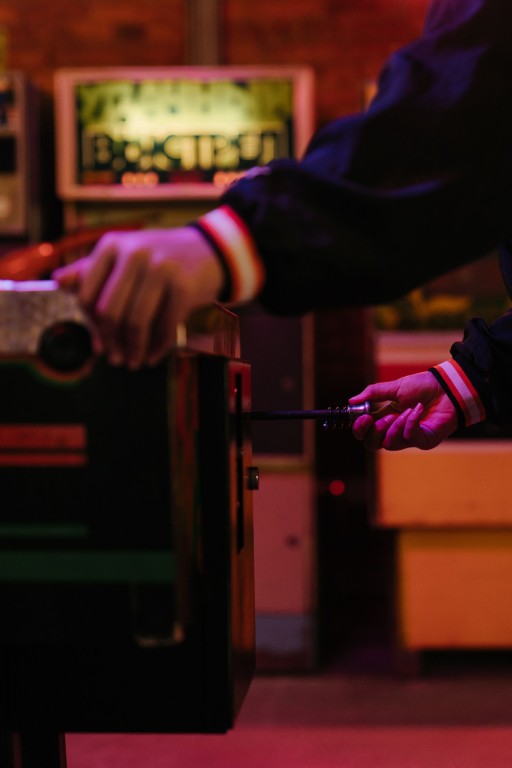
"You've got to always, at the very least, believe in your abilities and the fact that you can pull it off and play very well. Because the more you think that way, the more it'll translate in your gameplay. I mean, if you're thinking negative thoughts, like 'oh, I don't know, I don't know how good I'm going to play.' Things like that. It often shows through"
That little nugget is something worth latching on to. It's easy to see how someone who legitimately wins nearly every tournament he enters could have that confidence born purely out of results. It makes it easy, but the second half is more important. It's about believing in your abilities. Believing you can show up and play your best game. For most of us becoming the champion will require that and a little luck, but it's believing you can bring your best which puts you in position to have the opportunity for success.
Confidence is hard, I struggle with it immensely. One quote from Escher makes me feel better about this. Despite having spent years as the world's #1 player he still walked into the INDISC wondering "Do I still got it?" It was the confidence in his preparation and skills between the buttons which let him just step up and play at his high level. When you can't find the belief that you'll win the entire event, sometimes all you need is that belief that you can step up and GC any game in the bank.
I was genuinely interested to see if or how Z-Mac differed here. Without holding the world's #1 title does he have the same confidence?
"So generally, on day one, I'm not too sure what to expect, because, you know, you've never been to the venue, you haven't played those games, you haven't played in a day or two or whatever. And so you don't know how you're playing. And so, you just generally want to play well, just trying to remain calm and collected."
Like it did with me me, his answer will resonate a little closer to what we're feeling walking up. But just like every other great the ultimate belief you will come out with the trophy is still crucial. Here's his full quote because it's worth it's weight in gold:
"For a finals day, it's a little bit different, because you do have more of that information of like, how well you're playing, how well the games are playing, you know, kind of what you're expecting. The answer to those questions can influence a lot of your mindset. But I think going in with confidence is, is very important, right? Like you got to, you got to think you're going to win in order to win, you can't win if you don't believe in yourself.
And so going in fully confident and not with fear is super important on finals day. I think I always do. Maybe I don't always, like, immediately feel that or I don't always display that. But the belief is there. In my heart, I always believe I'm going to find a way to win.
And that's important to keep you in it. If you give up, it's over."
If you give up, it's over. Amen.
Thinking before your plunge
You're standing at the machine, ball one, hand on the plunger. What's going through your head?
This was probably the question I was most excited to ask, hoping for a uniform answer guiding what the "correct" mindset is when it's your turn to put a ball into play. That's not exactly how it turned out. Zahler described his process mechanically. The importance of paying close attention to the flipper tip (whichever part you can see best) to the marking lines. On some classic games the plunge is the most important part of the game, making note of the perfect plunge is crucial for consistency.
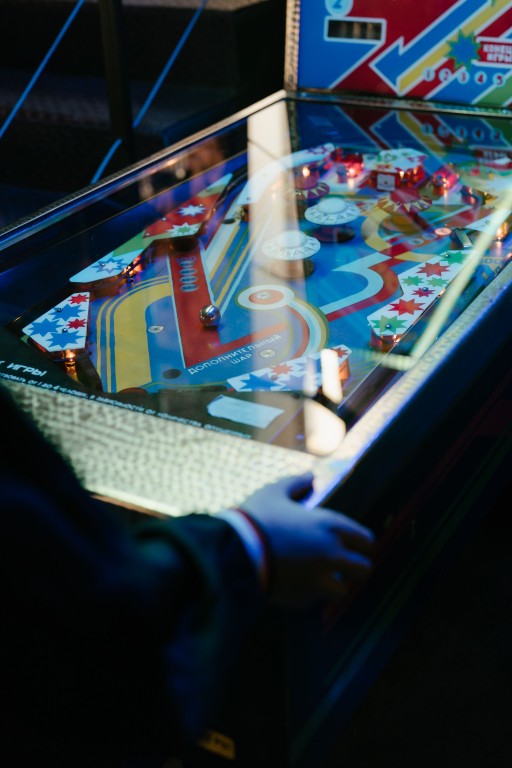
He notes that he will play with the flippers, note their angle when held (this will tell you how easy it is to trap, and give you an idea of how to aim). He'll practice tapping, finding the 2-stage point etc. He focuses on preparing himself to execute.
You should be doing all of this, but what about what's in your mind. While described differently, both Escher and Zach gave similar responses. For Escher it's all about trusting his preparation:
"I'm very much of a flow guy. It's a mentality … sometimes I step up and I rip it immediately and I don't think. All the thinking has already been done before I've plunged.
I know what I need to do, and now I just have to do it. The moment I'm up at the game, especially in card format, like INDISC, you have a really, really long time to think about your game.
So stepping up before the plunge I'm not really thinking about anything pinball related. It's just kind of like getting a good mindset, slow down, make your shots, get it done. You know, there's no reason to put all the stress on yourself before the ball.
Sometimes you do, like when you're in a head to head scenario, a lot can change between each ball. And that's when the thinking before the plunge is a lot more meaningful. Adapting strategy, just trying to put points on the board, or going for a home run. It doesn't matter.
It's a lot more dynamic that way. I think I'm kind of all over the place on my decisions. A lot of times, especially when I've waited in a queue, I usually rip the plunge just immediately."
The common advice isn't up for debate: you need to have a plan before your plunge. You need to know exactly what your plan is, and when the ball is put into play it's time to execute. As Zahler points out:
"Because if you don't and your opponents do, that's a big advantage to them."
After the ball is in play, how does this change?
Thinking while between the buttons
Here is the first place where we really come across some disagreement in approach. Zahler's mindset is exactly what you would assume it to be when watching him play tournament pinball. His standard operating procedure is focusing on the one shot, the one goal in that moment.
"All I'm thinking about is hitting the next shot I'm going to hit. And then as soon as I flip: if I miss it, then I have to play defensively. But if I hit it, then I'm immediately thinking about the next shot I'm about to make."
But then hints at the true grail of all performance and competition: locking in. How he approaches each ball to be focused on the moment, but when you're really locked in you can also be thinking a couple steps ahead. I take this as a good reminder that forcing this thinking into the future should never be your goal, but something that just happens when you're at your best.
"You want to be very focused on what's about to happen because that's where the ball is going to be right now."
Sometimes the most obvious statements are the most valuable to be reminded of. You have a goal, but you get there one shot at a time.
While the play style isn't hugely different, what's going on inside Zach's head a is a little different.
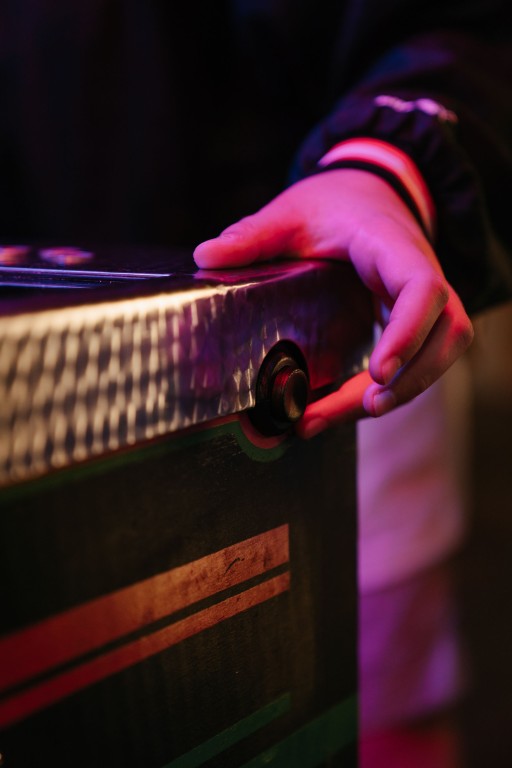
"I talked with Escher about this a lot. And when he and I have talked he's always said, every decision within the game he's thinking about. Performing the drop catch or doing a live catch or whatever.
For me, it's very much just, I don't know, automatic in the background, not thinking about it."
He goes on to say that his mind doesn't know what his hands are doing. Z-Mac steps up to each game trusting the work he's put in, and the plan he's ready to execute. He's fully pulling his first brain away from the driver's wheel and letting his second brain perform the way he trusts it already knows.
(the two-brain analogy I'm using here is from one of, if not the, most useful book every written for the competitive mindset: The Inner Game of Tennis by Timothy Gallwey. Read it)
We've all been in this flow, played at our best before, but for most of us everything changes when it all comes down to making that one crucial shot.
The shot that gets impossibly skinny
You just have to hit the spinner, the ramp, or the scoop. You shoot it all the time, it's no big deal, but with the weight of the win on your shoulders the shot becomes smaller than the ball. When I asked about this moment from three of the players who clutch up more than anyone I got three different answers. I think this is the single most useful disagreement in the whole set of interviews, because it means there isn't one right technique, and you should find out which one is actually yours.
Shrink the moment. The more you play, and the more success you have, the less this is going to happen to you, but Jason made a really good point about how a lot of games really add to this pressure. They're designed to use music, sound cues, and light shows to make you feel this pressure. One strategy he recommends for people is to reframe the situation: lie to yourself.
If you "trick" your brain into believing you need to hit that shot 3…10… or even 100 times in a row for it to matter, the moment no longer holds the same weight; the stress of one big shot falls away.
Embrace the moment. On the other end of the scale is Zach. He doesn't try to fool himself into thinking the shot is routine. His entire strategy has been to get himself to exactly this moment. He visualizes it, embraces the importance of this one shot, but instead of that distracting him it's his way to pull himself more into focus. Using the pressure as fuel to lock in. He's up front that this strategy isn't for everyone, but for himself minimizing the importance of the shot will just cost him the intensity he uses to make it.
The moment doesn't exist. Escher's approach to this moment aligns with what you'll hear from countless greats across all competitions. The shot is the shot, it's no different now than it is when you're just jamming in free play. The goal is to play your most natural game, whether anyone's watching or not, until "trying my hardest" and "just playing" are one and the same. The work isn't done in the moment. It's done months before, in practice, closing the gap between how you play when it's nothing and how you play when it's everything.
I was delighted to get three legitimate, well reasoned answers to this. No advice to "calm down" or "play better". Whether you shrink the moment, amplify it, or erase it entirely, the key is to find out what works best for you and lean into it. No matter what you choose at the end of the day this is a physical, mechanical, game and the more skills you have the more likely you are to succeed.
The most important mechanical skills
Before we even talk about what your hands are doing you need to make sure you're looking at the right place. A lot of lost balls come from incorrect tracking. You look at the flipper to line up the shot. The instant you flip, your eyes need to already be moving to the target. If you're not seeing the target before the ball reaches it you're way behind in reacting to make a save when the shot misses.
The biggest skill gap between good and great players is how far into the future they're seeing. It's like in chess: a player thinking one or two moves ahead in the midgame is always going to lose to a player calculating up to five. Most of us flip, wait, see it's coming down the middle, try to save it, lose your ball, tilt the machine, swear loudly, and get a yellow card.
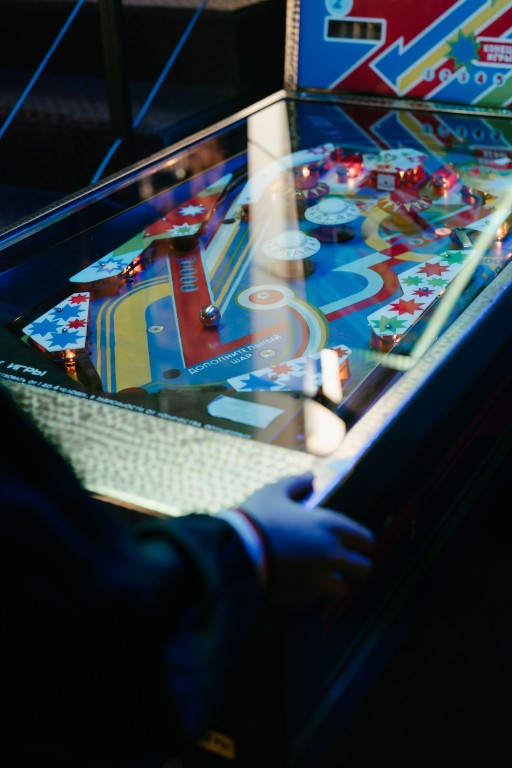
The best players are seeing the miss before it happens, calculating the trajectory of the ball, and nudging, often when the ball is still at the top of the playfield to avoid SDTM before it starts to happen. They're not reacting when the ball reaches the flippers, they're not making bigger moves, they're just acting earlier. Without a doubt Zahler is the best in the world at this. Escher remarked how Jason's slap save is so good that he will simply never drain down the middle, no matter how tight the tilt is. This isn't because he has magic hands, it's because he's acting early enough to get the ball onto a trajectory where the slap save is possible, then executing it flawlessly.
This is maybe the most actionable takeaway in this whole article: if you're nudging when you see the ball is in trouble, you're already late. The skill isn't about reacting: It's not needing to react at all.
The drop-catch
Simply put, there is no skill more important in all of pinball than the drop-catch. I'll just quote Escher directly here:
"Literally you could get away with not knowing another skill besides drop-catch. You can drop-catch everything that's a live-catch.
Basically every time that you do a live catch, when the ball comes to the thick part of the flipper, even halfway to the flipper, you could have gotten away with a better drop catch. The live catch is more dangerous if you mess it up.
Drop catches only kill you if you do it at a bad time."
Simply put, the drop-catch is S++++ tier. While harder and scarier to learn than a simple dead-bounce, the drop catch is safer in many scenarios. In a tournament with steep machines and very bouncy rubbers dead bouncing can often put the ball completely out of control where a drop-catch will erase the momentum, slow the game down, and put you in control for either a clean trap or the ball on your stick to make the shot.
That said, there are some games where a live-catch = winning.
The live-catch
The live-catch is an S tier skill on its own; it's just more dangerous than a drop catch. When you botch a live catch the ball is out of control, and often you end up flipping it right into an outlane. It's harder to perform consistently, and on some games require nudging off the wall first to even make it possible or consistent (such as the right feed on most Creature From the Black Lagoon's).
But on many games, creature included, there are common feeds which if you can live-catch consistently, the game becomes easy, and anyone who can't is playing in reaction chaos. But there is one caveat where the live catch's usefulness can't be questioned.

Live catching off a scoop, off the pop bumpers, or out of a sling is a meaningfully different skill from live catching a ball rolling straight down to the flipper. For most of us this is the version of it almost nobody bothers to practice. If you've only ever drilled the easy version, you've only built the less useful half of the skill.
And while these two skills get the top honors, the dead-bounce is still worth talking about.
The dead-bounce
Escher will argue that a drop-catch is preferable in nearly all ways, but dead-bounces are still sometimes the correct tool for the job. If it's going to be a safe bounce, and you need the ball on the other flipper, it's an easy way to get the ball where you need it. The issue only comes in when you lean too hard on it trying to make it your number primary method of control.
The usefulness of the dead-bounce is highlighted by Zach. While also saying the drop-catch is the most important skill he specifically talks about how dead-bouncing is one of the easiest ways to slow the ball down, increase the control.
"I feel like that, more than anything else, helps me get in that flow state of things"
But more than this he got into one thing the others didn't: micro control.
Micro Control
This is possibly the biggest area where the great players separate themselves from the rest of the pack. Staying calm with the ball down low, refusing to ever flail. Assisted dead-bounces are part of the new meta and something you need to be incorporating into your game. Giving just enough nudge to make the dead bounce viable when the ball is slow moving putting it on the correct flipper for the shot you need to make. While important in all games this is an absolutely critical skill for success in classics, where often one shot (the lit spinner) is the only thing that matters.
Micro control has been expanding in use over the last few years even to the point of purposely breaking down the Shatz (A.K.A the alley pass, flipping the ball into the other flipper's inlane). On lots of games a clean Shatz will send the ball up and out of the inlane putting it out of control. So instead you flip later, purposely putting the ball into the other flipper instead of directly into the inlane.
Micro control is something you can practice at home, and really should. Spend hours just working on putting the ball exactly where you need it by bumping, Shatzing, and tapping.
With all this put together, where does it actually get us?
What actually makes a champion
While all three of these players will agree with each other on this, their answers were actually distinctly unique.
Jason honed in on volume: hundreds of tournaments, playing competitively since childhood, meaning there is functionally no situation left that he hasn't already lived through at least once. There's no trick here. It's just time, and a very specific kind of preparation. Detailed written notes on games he's about to play or has just played, so nothing about a machine is ever really unfamiliar.
Z-Mac's answer circled back to control as the defining trait: not flailing, not hoping, but being able to see what's going to happen before it happens and having the tools to make the outcome match the plan. He was careful to note that while flailing sometimes works (sometimes it's even the smartest available option given a player's current skill set) but it's not what separates the very best from the very good. If you want to be great you need to get yourself to a place where you maximize the amount of time you're in control.
Escher gave the most pointed answer, and it doubles as the best explanation I've heard for why so many clearly talented players plateau: consistency, not accuracy, is the hardest thing in pinball.
"You will always, always get worse before you get better in pinball. Because at the end of the day, there are players that will just flip the ball every time it comes to the flipper. They know how to dead-bounce and they're pretty accurate on the fly. And when you watch them, it seems like the ball never drains.
And that play style is good enough to get you in the top 100 in the world. And as long as you're accurate enough, you have enough game knowledge, you dead bounce… well, you bump over and you can adjust to any setup, that can get you top 100 in the world."
But if you want to go beyond that, and become a regular in final fours, you need to be playing a specific, more controlled, way.
Comfort with your own style, he argued, is what makes any style work; the players who are anxious about their own inconsistency are the ones who never stabilize, regardless of talent. But going from good to the very top means eventually giving up some of that comfort and adopting the more controlled, less forgiving game that the true champions play.
Read together, none of these three answers actually contradicts another. Volume gets you the knowledge. Control gets you the ceiling. Comfort with your own game gets you the floor you can reliably stand on while you build toward that ceiling. You probably need some of all three, and if you're stuck, it's worth being honest about which one you've been skipping.
P.S: Once again I want to thank everyone who took the time to answer my messages. The pinball community is a spectacular collection of people and I'm constantly amazed by the generosity and kindness to be found here.
Want to Become Better at Pinball?
Invest in yourself! Both Jason Zahler and Escher Lefkoff offer pinball coaching. No matter what skill level you are, it will be the best thing you can do for your game.
Escher Lefkoff
When it comes to thinking and speaking of pinball at the highest level, you will struggle to find anyone as knowledgeable, well reasoned, and articulate as Escher. If you like practical theory, and a level of depth into technique and strategy you've probably never considered, or you're the kind of person who learns best speaking one on one; you owe it to yourself to have a chat with Escher. You can hire him for private 1 on 1 coaching here.
Zahler Pinball
The first ever three-time consecutive world champion, Jason Zahler (World Rank #1) is quickly gaining ground toward becoming the winningest player in our sport. Not only can you learn from his advice, but you can do it for free. Sign up, start getting better at pinball.
Comments
Log in to leave a comment.
